Last updated: 17 July 2026
Short answer: An honest honey label names one floral source, one region, and one harvest date, lists honey as the only ingredient, and its seller hands you a lab certificate when you ask. Words like “pure,” “natural,” “premium,” and “royal” are marketing, not proof, and a label that leans on them while hiding the source is usually hiding adulteration.
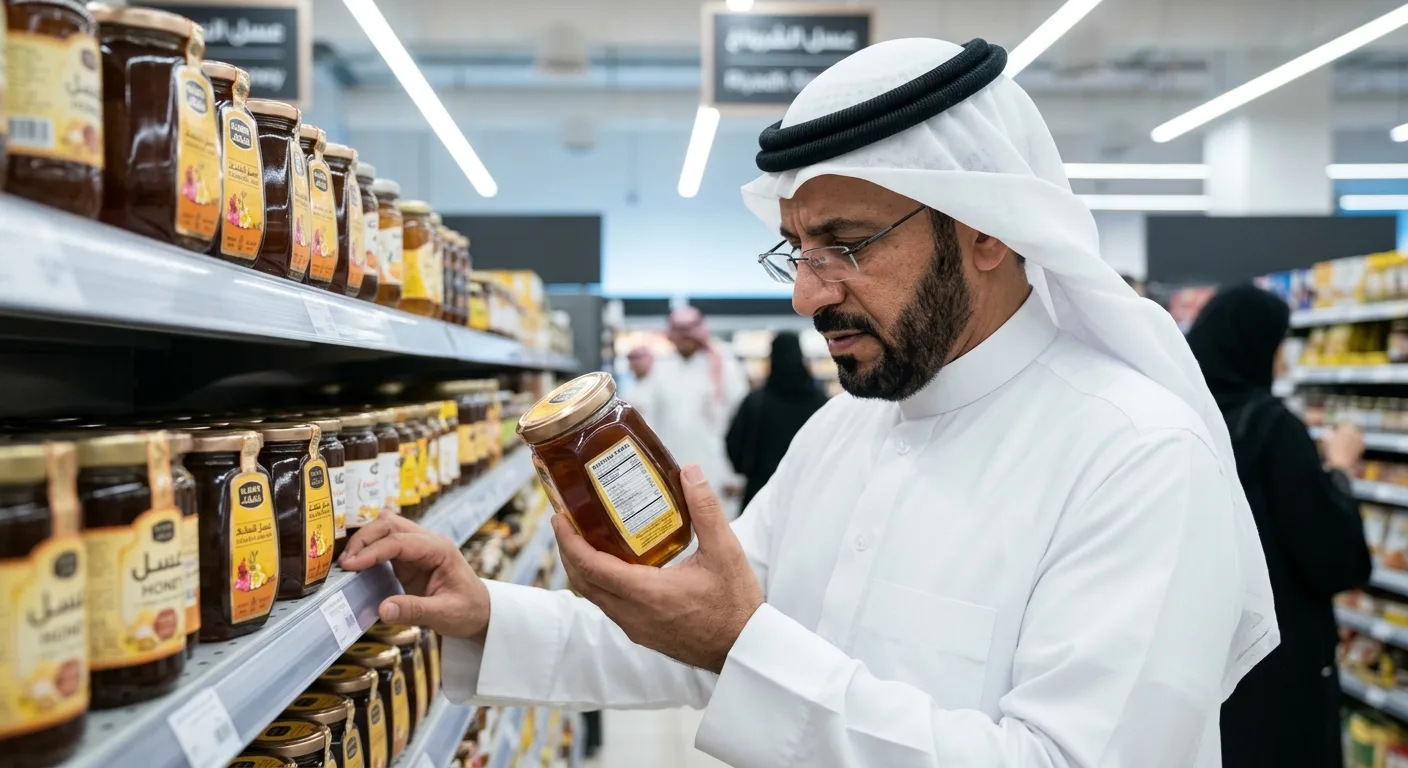
Most Gulf honey buyers do not get cheated at the till. They get cheated at the shelf, holding a jar, reading a front label built to sound trustworthy and say nothing. The distrust is loud for a reason: “العسل الموجود كلوا مغشوش بالسكر ..وصعب تثق بحد يبيعك عسل اصلي صافي” (the honey out there is all cut with sugar, and it is hard to trust anyone selling you real, pure honey). A label is the first thing that can either earn that trust or dodge it. We read honey labels for a living, from the buyer’s side: we purchase raw Altai honey by the drum for our lozenges, not the jar, so the paperwork behind a batch is our job before anything reaches a mould. This is what an honest one tells you, and what a dishonest one leaves out on purpose.
What should an honest honey label tell you?
A label is a set of claims, and honest claims are specific enough to check. When we take on raw Altai honey, five details decide whether it goes into a lozenge: the floral source, the region, the harvest week, the ingredient, and the COA the supplier holds on it. A named source and a certificate can be checked; a vague word on a front panel cannot be checked at all, which is the whole game. Here is what a label worth trusting puts in writing, and what each line protects you from:
- One named floral source. “Sidr,” “acacia,” “wildflower,” or in our case Altai meadow and forest flora. A single named source is a checkable claim. “Blend of natural honeys” or “table honey” means many origins mixed, which is the easiest place to bury cheap syrup.
- One named region, not a country flag. A real origin is a place: a valley, a reserve, a range. Our honey says Altai, a UNESCO biosphere reserve in southern Siberia, harvested near Lake Teletskoye. “Product of more than one country” on the back panel is the legal phrasing for a blend a supplier will not trace for you.
- A harvest window or batch date. Honey is a crop, so it has a season. Ours is capped between late June and mid-August, and the colour shifts across that window. A jar that carries a harvest date and a batch code can be traced back; a jar with only a “best before” two years out tells you nothing about where it came from.
- Honey as the only ingredient. The ingredient panel should read “honey” and stop there. Once you see “glucose syrup,” “fructose,” “rice syrup,” or “added sugars,” you are no longer holding honey at the price of honey. That syrup line is exactly what FDA testing keeps flagging on doctored “men’s” honeys, which we broke down in what is inside royal honey for men.
- A certificate available on request. The label cannot print the whole lab report, but the seller behind it can produce a certificate of analysis (COA). We keep a COA on the raw Altai honey we buy before it goes into a lozenge. An honest seller of jarred honey hands you the same without flinching; a reseller of a blend goes quiet.
What words on a honey label hide adulteration?
The dangerous words share one property: none of them can be measured, which is exactly why they get printed in large gold type across the front. When we assess raw Altai honey, “pure” is not a figure we can act on, so we read the pollen count and the sugar profile off the COA instead, because a lab put those numbers on paper. A buyer reads “pure” as a guarantee; legally it promises nothing.
- “Pure” and “100% natural.” No authority defines these on a honey jar, so a syrup blend can carry them legally. What we treat as proof of purity is the COA on the raw Altai honey, not the word. A cut honey and our raw Altai could both print “pure,” which is exactly why the adjective settles nothing.
- “Royal honey” with no ingredient list. “Royal” is a marketing name, not a recipe or a bee species. When a “men’s” royal honey names a benefit on the front but no floral source or full ingredient panel on the back, the mismatch is the warning. That claim-without-source pattern is precisely where hidden pharma has been found, and it is the reason our own lozenges spell out the whole recipe, 90% raw Altai honey with 5% Leuzea and 5% Red Root, instead of hiding behind a grand name.
- “Premium,” “wild,” “authentic,” “grade A.” Reputation words with no testing behind them. “Grade A” refers to appearance and moisture, not authenticity, so a filtered syrup blend can grade beautifully and still be fake. None of these words tell you the harvest week or the source, the two things we record for our Altai honey, capped between late June and mid-August.
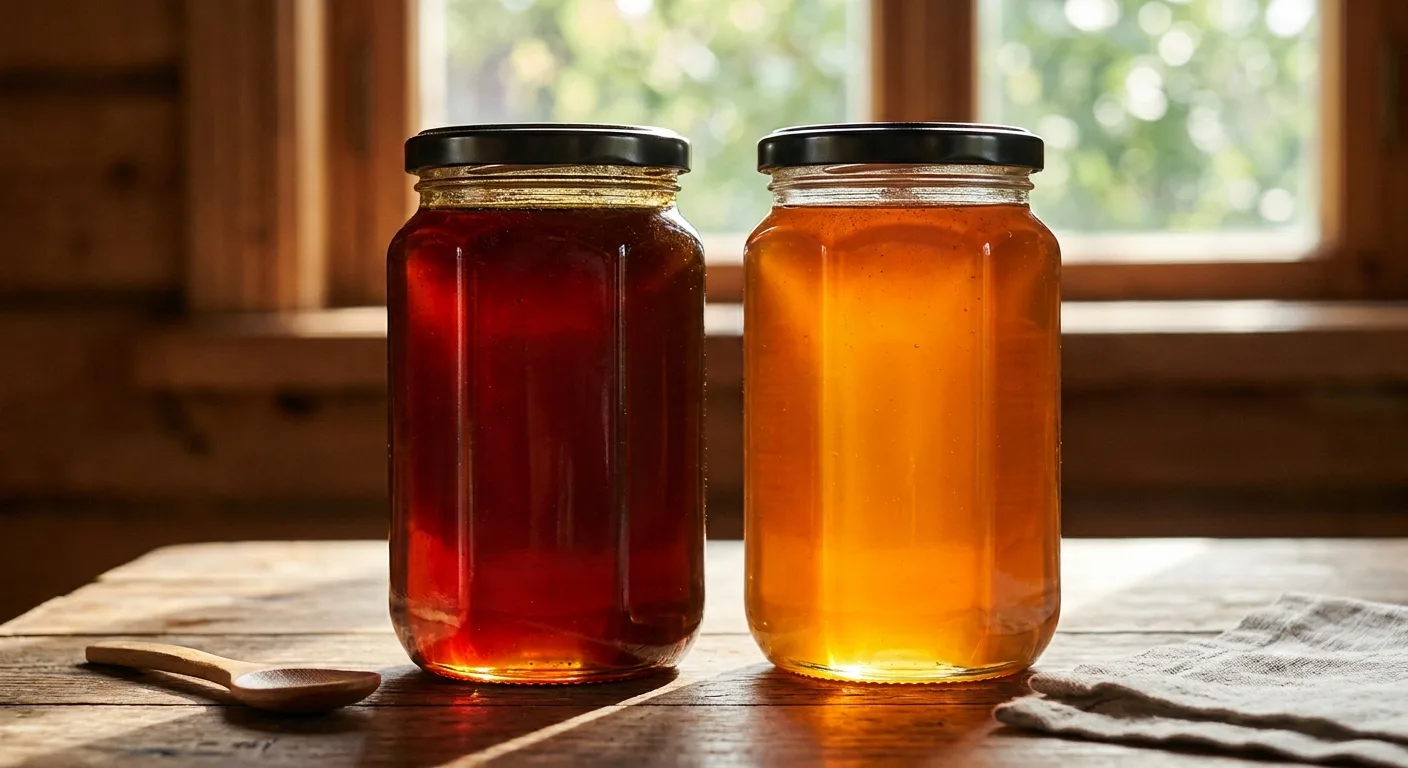
- A front photo brighter than any real jar. The photo counts as a claim too, and often the loudest one on the label. Studio-lit honey always glows clearer and more golden than an unheated jar under a kitchen light. Buyers feel cheated when the honey turns up darker and say so: “لونه بني مو زي الصورة” (its colour is brown, not like the picture). What misled them was the photo, while the honey behaved exactly as raw honey should.
- Silence where the source should be. The worst tell is an absence. No named region, no harvest date, no ingredient beyond “honey blend,” and no COA offered when you ask. A label that will not commit to a checkable fact is choosing not to, and that choice is the answer.
How do you read a honey label before you buy?
You can settle most of it in the aisle, in under a minute, without a water glass or a home test. This is close to the order we run through when a new supplier sends us an Altai batch to consider, scaled down to a jar on a shelf:
- Turn the jar over first. Ignore the gold front entirely and read the back panel. Everything checkable lives there: the ingredient list, the origin statement, and the batch code. It is the same move we make on an incoming Altai drum, where the supplier’s front sticker means nothing and the batch code that ties to a COA means everything. If the front is grander than the back is specific, trust the back.
- Read the ingredient line, not the flavour name. One word, “honey,” is what you want. Any syrup, added fructose, or “honey blend” moves the jar out of the honey category no matter what the front says. A named floral source like Sidr or Altai is a bonus checkable claim on top.
- Find the origin and the date. Look for a specific region and a harvest or batch reference, the way ours names Altai and a late-June-to-mid-August window. “Product of several countries” plus only a far-off best-before date is the polite label for an untraceable blend.
- Ask the seller for the certificate. The one thing a label cannot fake is a lab certificate of analysis with a named origin, and it is the one thing a famous name cannot substitute for. Ask for the COA. An honest seller produces it; a reseller of blends changes the subject, and that reaction tells you what the label would not.
Why does a government or supermarket honey brand still get called fake?
People in the Gulf openly ask whether even the safe-sounding names are cut, in searches like “هل عسل وزارة الزراعة مغشوش” (is ministry-of-agriculture honey adulterated). The suspicion is reasonable. A trusted name on the front does not change what the back panel is allowed to leave out, and a large brand blending honey from several countries can still print “pure natural honey” over no single source. So the question you put to a household brand is the same one you put to a jar you have never seen: does this commit to a named source and a certificate you can check. A familiar logo that dodges both earns the same doubt as an unknown one. Our own brand meant nothing in the Gulf when we started, which pushed us to answer buyers with a COA rather than a logo, and that habit stuck.
How our lozenges apply the same label discipline
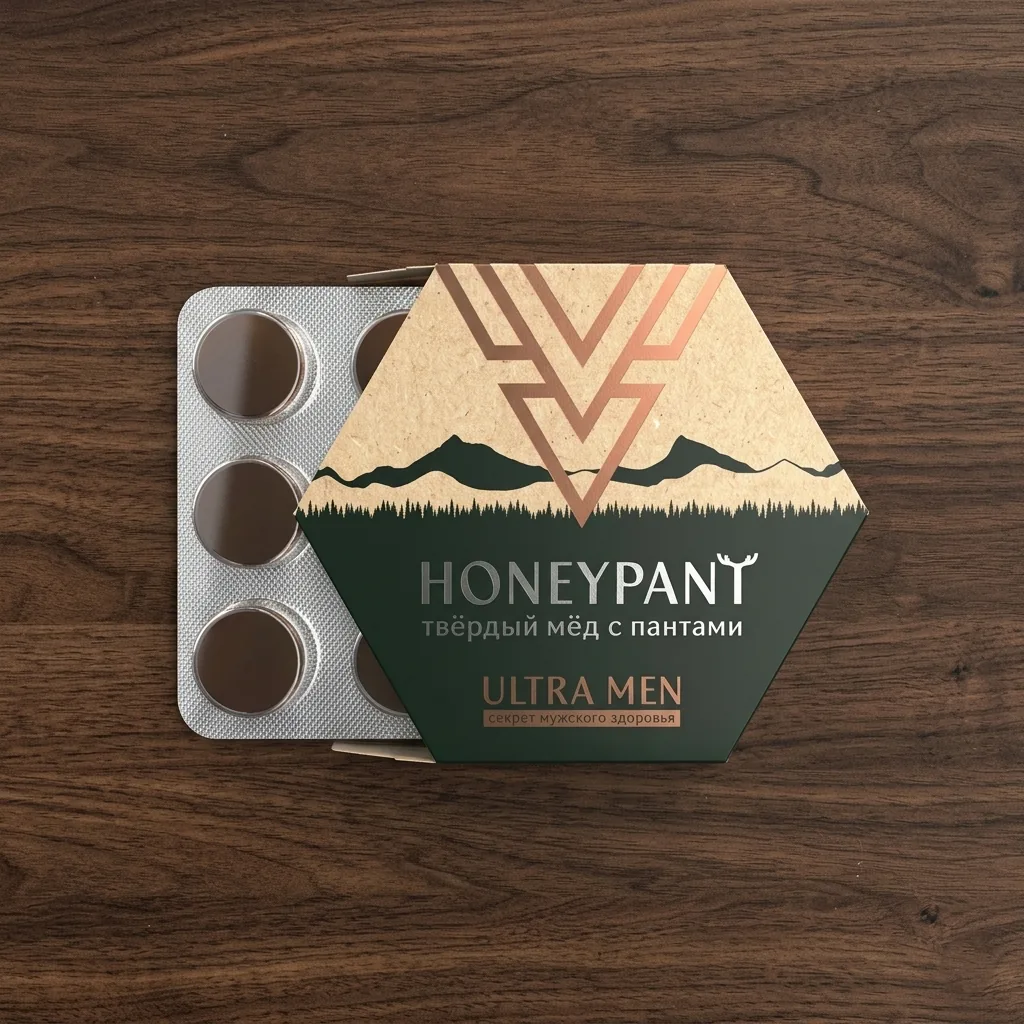
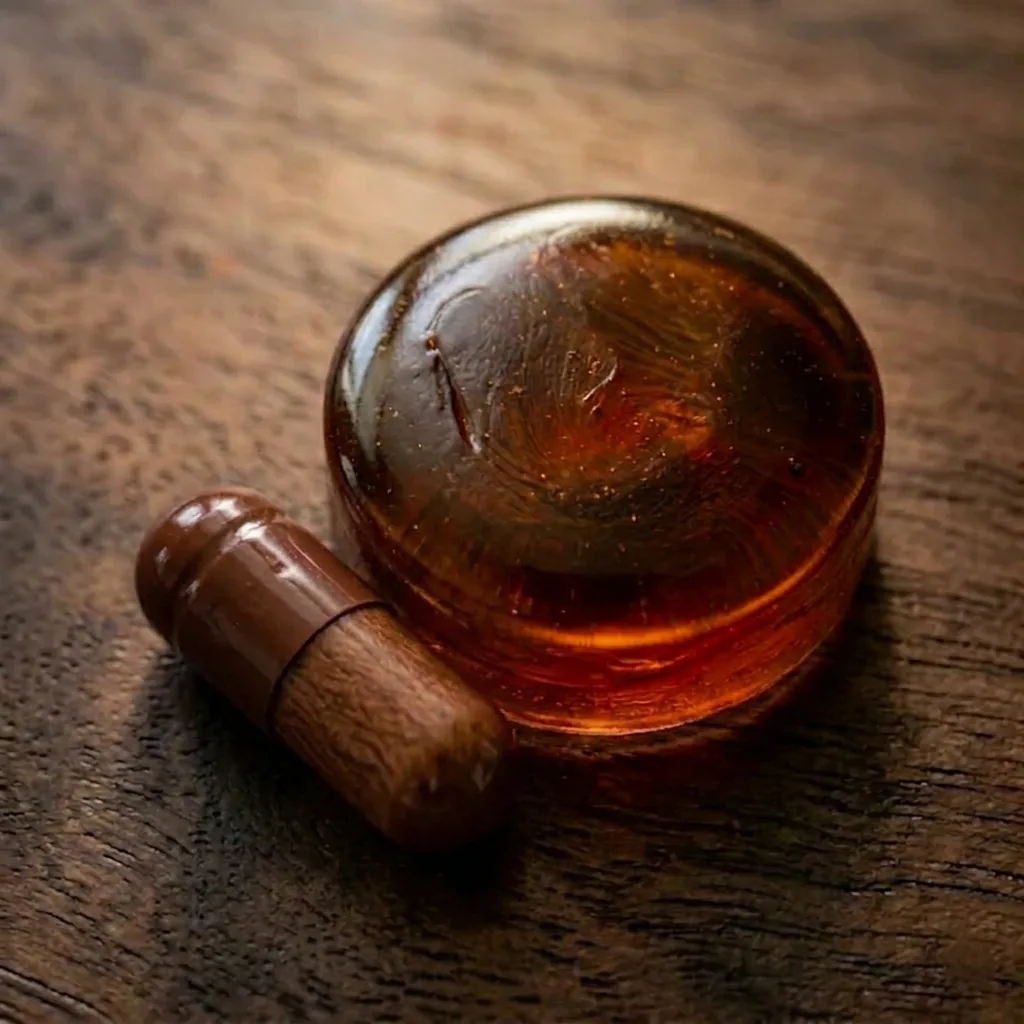
We do not sell honey by the jar, so we are not asking you to trust a honey label of ours. We sell a lozenge, and the honey inside it is our raw material, which means the checklist above runs on our own supply before you ever see the product. Each lozenge is about 90% raw Altai honey, plus 5% Leuzea (Rhaponticum), 5% Red Root (Hedysarum), beeswax, and a little concentrated cherry juice for taste, formed in Biysk. Read that list the way this article asks you to read any label, and every part is a checkable fact rather than an adjective: a named single-origin honey from a named region, a harvest logged between late June and mid-August, the honey held below 40°C so the pollen and enzymes are not boiled off, and a COA kept on that raw honey. Those are five commitments a “premium” gold front never makes. Three lozenges a day is the dose, and the steadier energy a man over 30 is after shows up around day 10 to 14 rather than in the first hour.
The ingredients page lays out the 90/5/5 make-up and names where in the Altai the honey comes from, with the lab certificate behind it. If you would rather test a jar of honey yourself once it is home instead of reading the label in the shop, our guide on how to tell real honey from fake covers those checks in depth.
FAQ
Does “pure honey” on the label mean it is real?
No. “Pure” and “100% natural” are not defined for honey by any food authority, so a jar cut with glucose or rice syrup can print them legally. The words are marketing, not measurement. Real proof of purity is a lab certificate of analysis with a named floral source, which a syrup blend cannot produce. Judge the ingredient line and the certificate, never the adjective on the front.
What ingredients should honey contain?
Honey, and nothing else. An honest ingredient panel reads “honey” on its own, ideally with a named floral source such as Sidr or Altai beside it. The moment you see “glucose syrup,” “fructose,” “rice syrup,” “invert sugar,” or “honey blend,” you are paying honey prices for something diluted. Even a product built on honey, like our lozenges, should name every part of its recipe rather than hide behind the word “blend.”
Why does the honey inside look darker than the label photo?
Because the photo was lit for the front label and the jar was not. An advert shoots honey under bright studio lights that lift the gold; the same honey in your kitchen sits darker and more uneven, which is how raw honey looks once the studio lights are gone. Our own Altai combs run a paler gold when they are capped in late June and a browner amber by mid-August, so even one source shifts across a season. A jar that arrives darker than its picture is behaving correctly. It is the picture that oversold.
Is a well-known supermarket honey brand safe to trust by the label?
Not on the name alone. A trusted brand can still blend honey from several countries and print “pure natural honey” without naming one source. The test is the same for any jar: does the label commit to a single origin, a harvest or batch date, and honey as the only ingredient, and will the seller show a certificate of analysis when asked. A famous logo that dodges those questions earns the same doubt as an unknown one.
Do you sell honey by the jar, and does your product carry a honey label?
No jar of honey at all. What we sell is a lozenge, about 90% raw Altai honey by weight plus 5% Leuzea, 5% Red Root (Hedysarum), beeswax, and a touch of cherry juice, formed in Biysk from a late-June-to-mid-August crop. Because honey is our raw material rather than our shelf product, we read labels and certificates from the buyer’s side of the counter, and we apply the same source-and-COA discipline to our own supply.
Reading a honey label: what to keep in mind
An honest label is specific and a dishonest one is vague, and that one difference settles most jars before your card comes out. Source, region, harvest, a single ingredient, a certificate: five commitments, and a fake cannot hold all five at once. Notice that none of them is the price. The Gulf buyers who write “صعب تثق بحد يبيعك عسل اصلي صافي” were not undone by a cheap jar, they were undone by an expensive front panel that sounded honest and named nothing. Our answer to that was to stop selling a label at all. The honey we buy goes into lozenges, and we hold it to the exact list above: one traceable Altai source, kept under 40°C, a COA on the raw honey, no gold adjective standing in for any of it. If you want the honey-and-herb route to steadier energy without staking money on a name you cannot check, the honey adaptogen lozenges carry that Altai paperwork with them, at about €3 a day, less than a Dubai espresso. Should your order arrive damaged or wrong, send a photo within 7 days and we replace or refund it.