Last updated: 30 June 2026
Short answer: Talh honey is a dark, smoky honey from the acacia (talh) tree of Arabia; Sidr honey is a lighter amber honey from the sidr (jujube) tree and the most prized single-origin honey sold in the Gulf. Both are single-origin honeys whose taste and colour shift with the harvest, the same reason we chose raw Altai honey for our lozenges.
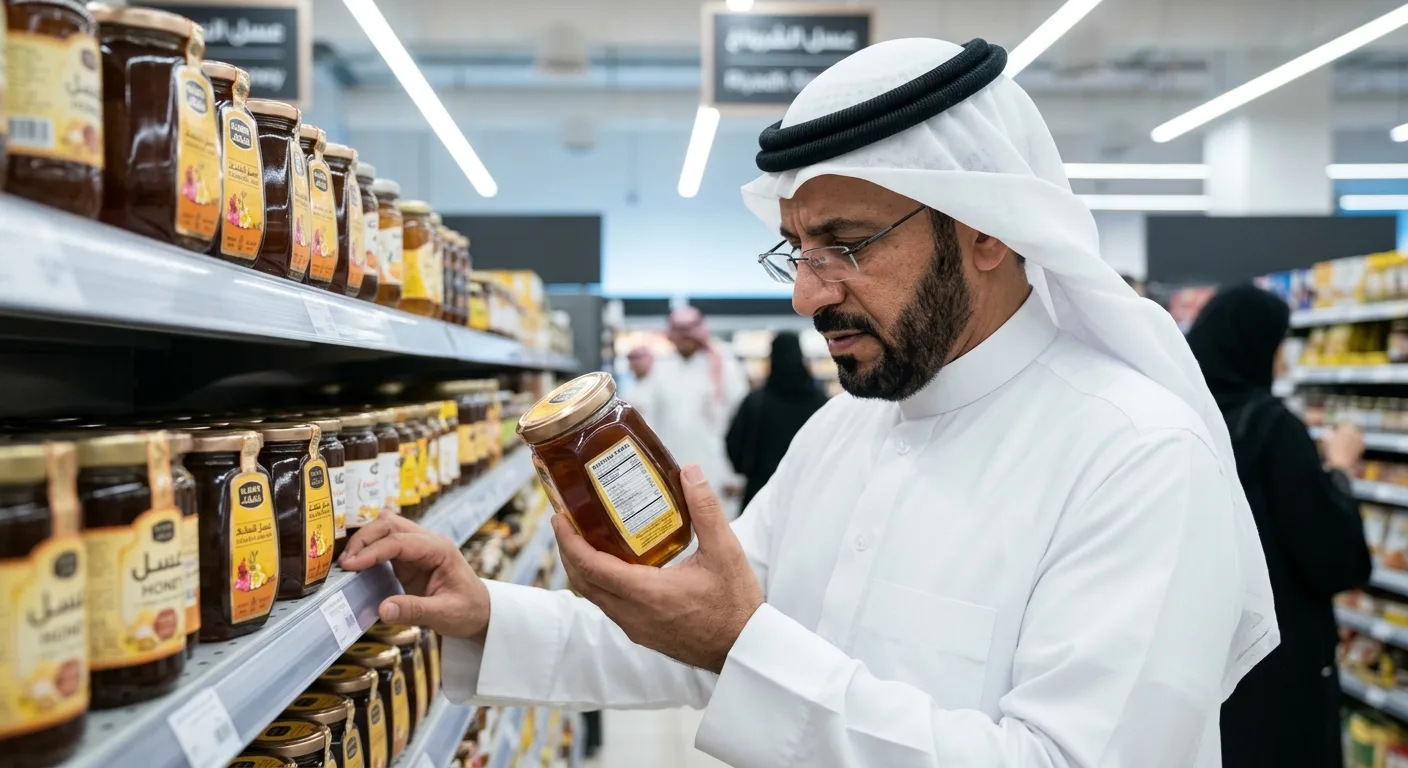
A buyer in Riyadh or Dubai stands between two premium jars, عسل السدر (Sidr) and عسل طلح (Talh), both expensive, both sold as the real thing, and asks which is worth the money and whether either matches the name on the label. That doubt has a sharp Gulf voice, the كله مغشوش (it’s all adulterated) distrust we ran into ourselves while sourcing the raw Altai honey for our lozenges. The two are different single-origin honeys, not a better-and-worse pair. Below we compare them on taste, colour, crystallising, and price, then show how we tell a true single-origin jar from a blend wearing the name.
What is Talh honey?
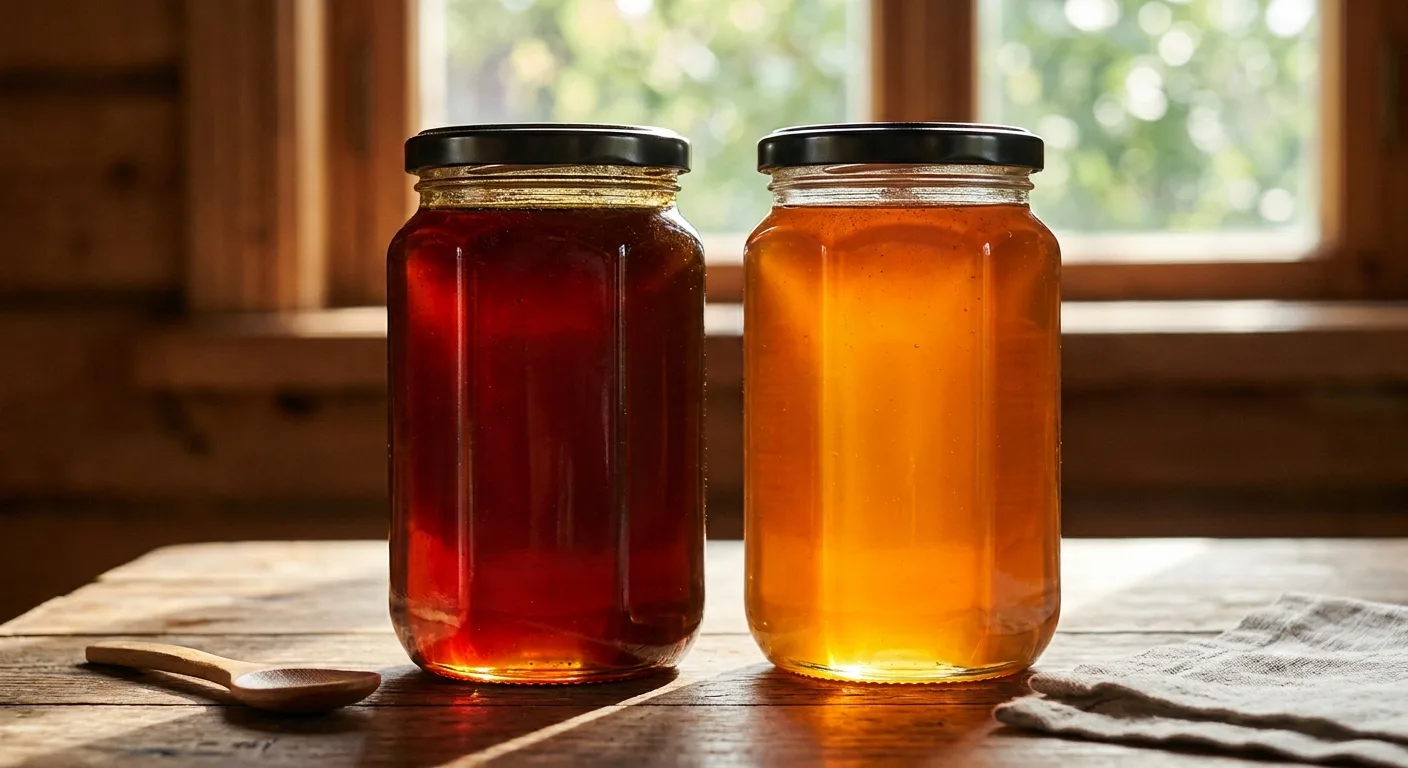
Talh honey comes from the blossom of the acacia (talh) tree of the Arabian Peninsula, mostly harvested in southern Saudi Arabia and Yemen. It runs dark, reddish-brown to near-black, with a strong, smoky, slightly bitter edge that surprises people who expect plain sweetness. We recognise that bitterness, because the 5% Leuzea (Rhaponticum carthamoides) we add to our own lozenges carries a similar herbal bite, and Gulf buyers say طعمه مر (its taste is bitter) as a complaint when they mean the opposite of a fault.
Talh is a true single-origin honey, which is the principle we followed in picking raw Altai honey as the base our lozenges sit on. One floral source, one region, one harvest window: our beekeepers gather it late June to mid-August near Lake Teletskoye in a UNESCO biosphere reserve in southern Siberia, and we hold it under 40°C so the floral character survives. A Talh jar should taste of acacia, and our Altai honey tastes of the Siberian foothills; taste nothing in particular and you can assume a seller blended it or cooked it flat.
What is Sidr honey, and why is it so prized?
Sidr honey comes from the blossom of the sidr (jujube, Ziziphus) tree, and it is the honey most Gulf buyers name as the best. It runs golden to dark amber, thick, with a rich, almost caramel depth, and it carries deep cultural weight across the region. The sidr tree blooms briefly and yields little, so genuine Sidr stays scarce, and buyers pay the highest price of any single-origin honey to get it. We met the same scarcity logic from the other side: our own Altai honey has a fixed late June to mid-August window and a yield of roughly 36 kg per hive, which is why we cannot mass-produce one identical jar.
The trap with Sidr is the كله مغشوش distrust again, because sellers fake the top-priced name most, stretching it with cheaper honey or sugar syrup and charging a Sidr price. One Amazon.sa reviewer caught it on colour, “the honey is brown, so where is that amount of royal jelly gone?”, when the jar did not match the ad. We answer that doubt for our own base differently: we COA-test every Altai delivery for safety and purity rather than trust the name on a drum, the same scrutiny a careful buyer brings to a Sidr jar.
Talh honey vs Sidr honey: which suits you?
The two are honeys for two different tastes, so what matters is which one fits your palate. Buyers ask us the same about our Altai base, ايهما افضل (which is better), and the honest reply puts character ahead of any ranking: you judge a single-origin honey by how it tastes and behaves. Talh is the dark, strong, smoky one; Sidr is the amber, rich, prized one. A buyer weighs five things when choosing between them:
- Colour. Talh runs dark, reddish-brown to almost black; Sidr runs golden to dark amber. Neither stays uniform jar to jar, and that variation is the honest signal. Our raw Altai honey arrives a slightly different shade each harvest depending on what flowered near Lake Teletskoye that late June to mid-August, and a real Talh or Sidr shifts with its season the same way.
- Taste. Talh tastes strong and smoky with a bitter acacia edge; Sidr tastes rich and deep, closer to caramel. We know that bitter edge from the Leuzea and Red Root (Hedysarum neglectum) in our own recipe, where buyers also say طعمه مر. A flat, candy-sweet taste with no character means a seller heated the honey thin or cut it with syrup.
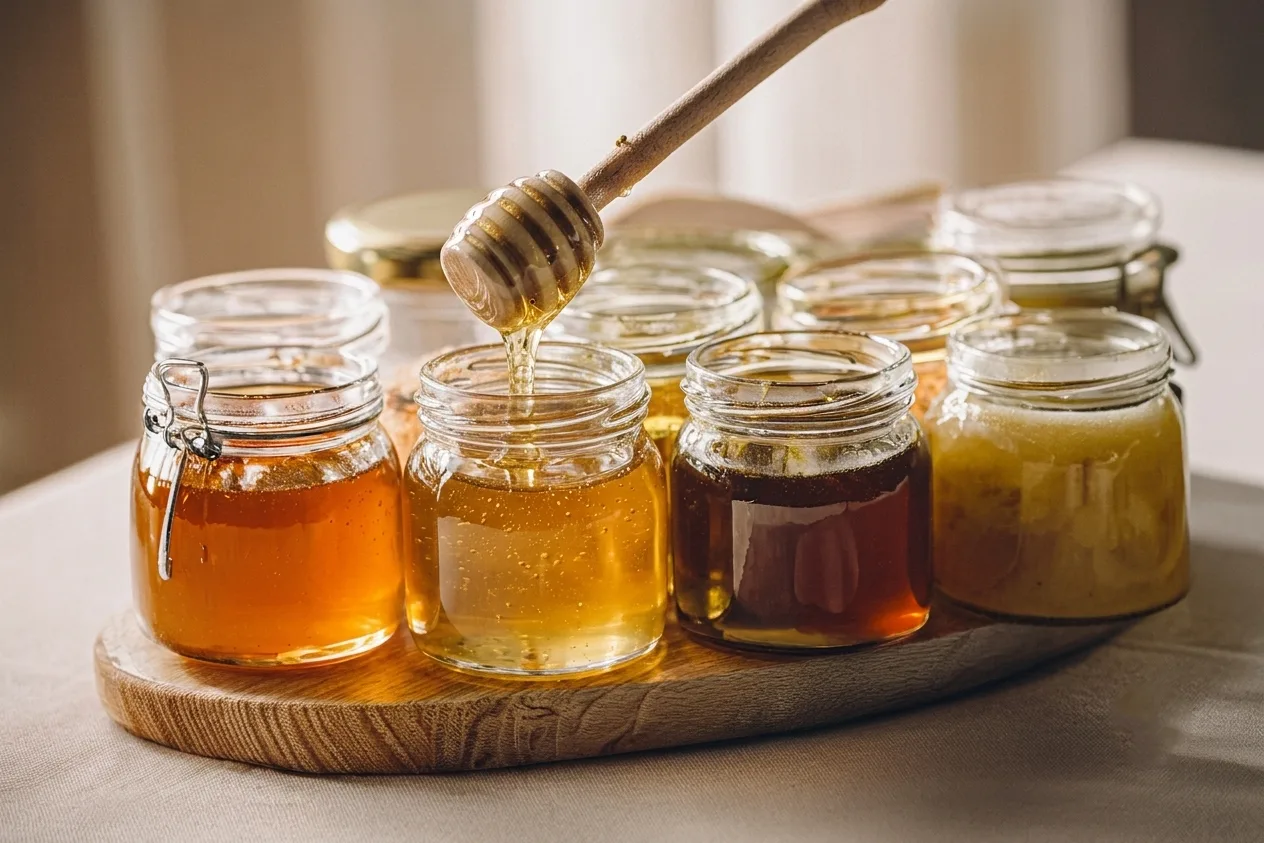
- Crystallising. Both are raw single-origin honeys, so both turn thick or grainy over time, Talh usually slower than lighter honeys. Our Altai base stiffens and grains a few months after we receive it, and a premium honey that never sets at all usually means a producer heated it to keep it runny.
- Price and scarcity. Sidr usually costs more than Talh because the sidr tree yields so little, and both sit above ordinary blossom honey. We hit the same wall sourcing Altai honey, one short season and about 36 kg a hive, so a “Sidr” or “Talh” jar priced like supermarket honey almost always means a blend.
- Origin honesty. A buyer should check origin before paying any premium-name price, because only true single-origin honey, one tree, one region, one harvest, earns that price. The moment a seller blends it with cheap honey, that buyer overpays for syrup whatever the front label claims, which is exactly why we COA-test our single Altai source instead of trusting a label.
No single row settles it, but run through all five and you can work out which honey suits your taste and whether the jar matches the name. They map closely onto the four checks we put each raw Altai delivery through, with the COA, ahead of the 90/5/5 lozenge recipe. If you want the deeper home checks, the water test among them, how to tell real honey from fake covers them step by step.
Does Talh or Sidr honey crystallise, and is that a bad sign?
Crystallising is a good sign for both, and a lot of buyers read it backwards. A real Talh or Sidr jar turns thick, grainy, or solid as the natural sugars settle, which is what raw, unheated honey does. Our own Altai base sets grainy within a few months of every harvest, just as it should; if a premium honey stays perfectly liquid for years, a producer heated it to lock that texture in place. For the full mechanism, why honey crystallises explains it.
The flip side is the الطلب الثالث مختلف (the third order is different) complaint we hear, where one jar sets faster or sits darker than the last. With single-origin honey that difference is the point. If a Talh or Sidr looks and behaves identically every time, a producer ran it through heat and filters to standardise it. For us the Altai honey is a seasonal ingredient tied to one late June to mid-August window, not a year-round identical commodity, and we accept that batch-to-batch shift as the price of keeping it raw.
How do you tell real single-origin Talh or Sidr honey from a blend?
You can check most of it before any lab test. These are close to the signals we run a raw Altai delivery past before it goes into a lozenge:
- Read the price against the name. Genuine single-origin Talh and Sidr cost more because they yield less, the same reason our Altai honey costs what it does on roughly 36 kg a hive. A premium name at a supermarket-blend price is the first warning.
- Look at colour and clarity. Expect dark, variable colour and some natural haze, Talh reddish-brown to near-black, Sidr golden to dark amber. Our Altai honey shifts shade between harvests too; glass-clear and identical every time points to heating and fine filtering.
- Taste for character. A real Talh tastes strong and a little bitter, a real Sidr tastes rich and deep. We check our raw Altai deliveries against that same flat-sweetness warning, because the Leuzea bite should come through, not disappear into syrup.
- Watch it over weeks. Real raw honey thickens, grains, or settles, the way our Altai base does within months of the late June to mid-August harvest. If a jar stays identically runny month after month, a producer processed it to hold that texture.
No single one is a courtroom test, but run all four and you sort a true single-origin jar from a name on a label fast. These are the same eyes we bring to a raw Altai delivery before it ever becomes a lozenge.
How our lozenges use single-origin honey
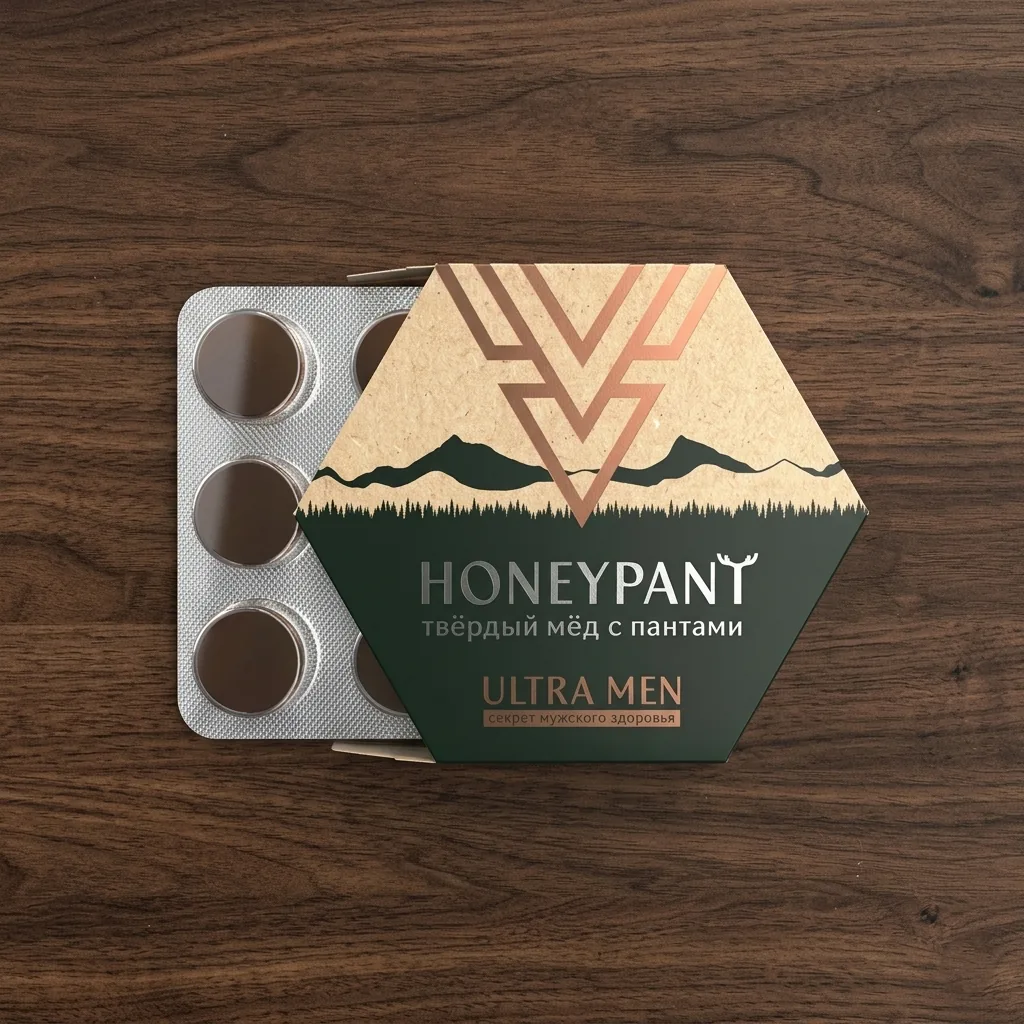
The single-origin principle Gulf buyers apply to Talh and Sidr is the one we used when choosing our base, just with a Siberian source instead of an Arabian one. We don’t use Talh or Sidr; we use raw Altai honey from one pasture near Lake Teletskoye, never blended, never cooked flat. A Talh or Sidr jar is one honey and nothing else; we build each lozenge on that same single-honey idea: roughly 90% raw Altai, then 5% Leuzea (Rhaponticum carthamoides) and 5% Red Root (Hedysarum neglectum) as the active herbs, plus beeswax and a touch of concentrated cherry juice for taste, five ingredients and no more.
A Sidr buyer rarely sees a lab number; we run one on every Altai delivery, keeping the honey below 40°C and checking it for safety and purity before any of it reaches a lozenge. You take a lozenge, never a jar of honey. A man over 30 lets three dissolve through the day, three to four minutes each, and feels the energy steady out somewhere around day 10 to 14. The base earns its place because it stays genuine single-origin honey, not a heated blend gone merely sweet.
FAQ
Is Talh honey better than Sidr honey?
Neither is better; they are two different single-origin honeys. Talh tastes dark, smoky, and slightly bitter from the acacia bloom. Sidr tastes golden, rich, and more caramel-like, and it usually costs more because the sidr tree yields so little. The right pick depends on whether you want the stronger, darker honey or the smoother, prized one, the same way our own Altai honey suits a different palate again with its herbal Leuzea edge.
Why is Sidr honey so expensive?
The sidr (jujube) tree blooms for a short window and produces very little honey, so genuine Sidr stays scarce and buyers pay a steep price for it. That same scarcity is why sellers fake Sidr most often, stretching it with cheaper honey. We meet the scarcity wall ourselves: our Altai honey yields roughly 36 kg a hive in one late June to mid-August season, so a “Sidr” jar priced like ordinary honey almost certainly hides a blend.
Why does Talh honey taste bitter?
The bitter, smoky edge is the natural floral character of the acacia (talh) blossom, not spoilage. Gulf buyers who grew up on Talh read that strong taste and dark colour as marks of the genuine honey, even as some write طعمه مر (its taste is bitter) as a complaint. We know the same effect from the Leuzea and Red Root in our lozenges; if a Talh tastes flatly sweet with no edge, a seller blended it or heated it flat.
Does single-origin honey like Talh or Sidr crystallise?
Yes, and that is a good sign. Both are raw single-origin honeys, so the natural sugars settle over time and the jar turns thick or grainy, as our own raw Altai does in the months after a harvest. If a premium honey never sets at all, a producer almost certainly heated it to keep it runny. Crystallising is raw honey behaving normally, not going off.
Do you sell Talh or Sidr honey?
No. We do not sell jars of honey of any kind. We make lozenges that are about 90% raw single-origin Altai honey, held under 40°C and COA-tested, with 5% Leuzea and 5% Red Root added as the active herbs. We compare Talh and Sidr because they share the single-origin principle we chose for our base, but what reaches you is a lozenge you take three times a day.
We picked one Siberian source instead of an Arabian one, and tested it
If single-origin honesty is what makes a Talh or Sidr jar worth its price, that is the standard we set ourselves a different way: we sourced raw Altai honey from one Siberian pasture near Lake Teletskoye rather than buy a famous Arabian name, then COA-tested every delivery so we can prove the origin rather than print it. Each lozenge holds about 90% of that raw Altai honey under 40°C, with 5% Leuzea and 5% Red Root doing the active work. You dissolve three a day over three to four minutes each; one set runs to 12 packs at €144, near €3.00 a day, under a Dubai café’s espresso, a course of about 48 days, with the steadier energy most men over 30 feel settle in by day 10 to 14.
Open a faked Sidr jar and the seller is already long gone, with no one to answer for it. We work the other way: a lozenge arrives in the box, and if it reaches you damaged or wrong, photograph it within 7 days and we refund or replace the order. The honey adaptogen lozenges suit men over 30 who want steadier energy, and they are not for anyone under 18; if you take blood-pressure, thyroid, or hormone medication, or react to bee products, talk to your doctor before starting, because the Leuzea and Red Root are active herbs, not a sweet. To judge the single-origin idea for yourself first, what’s inside the lozenges names all five ingredients, and how to tell real honey from fake walks through the water test and the rest.