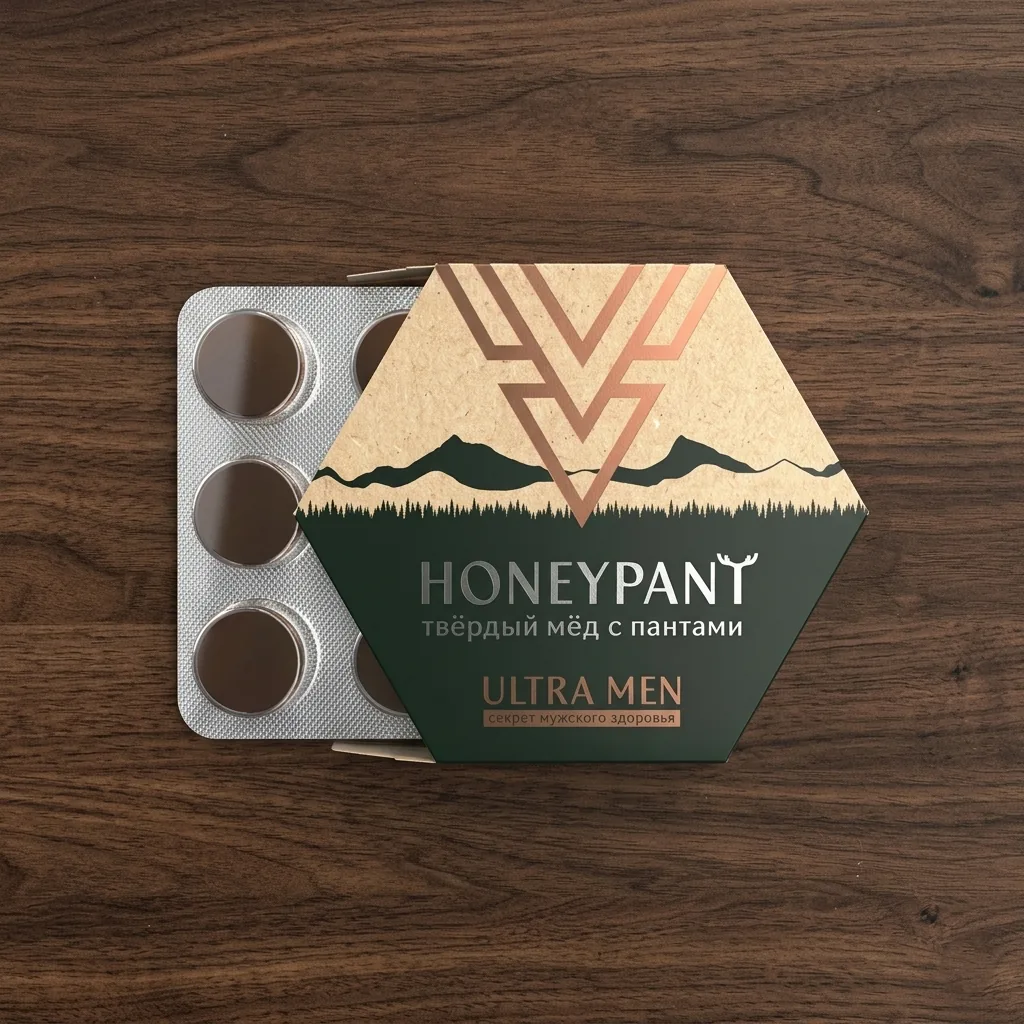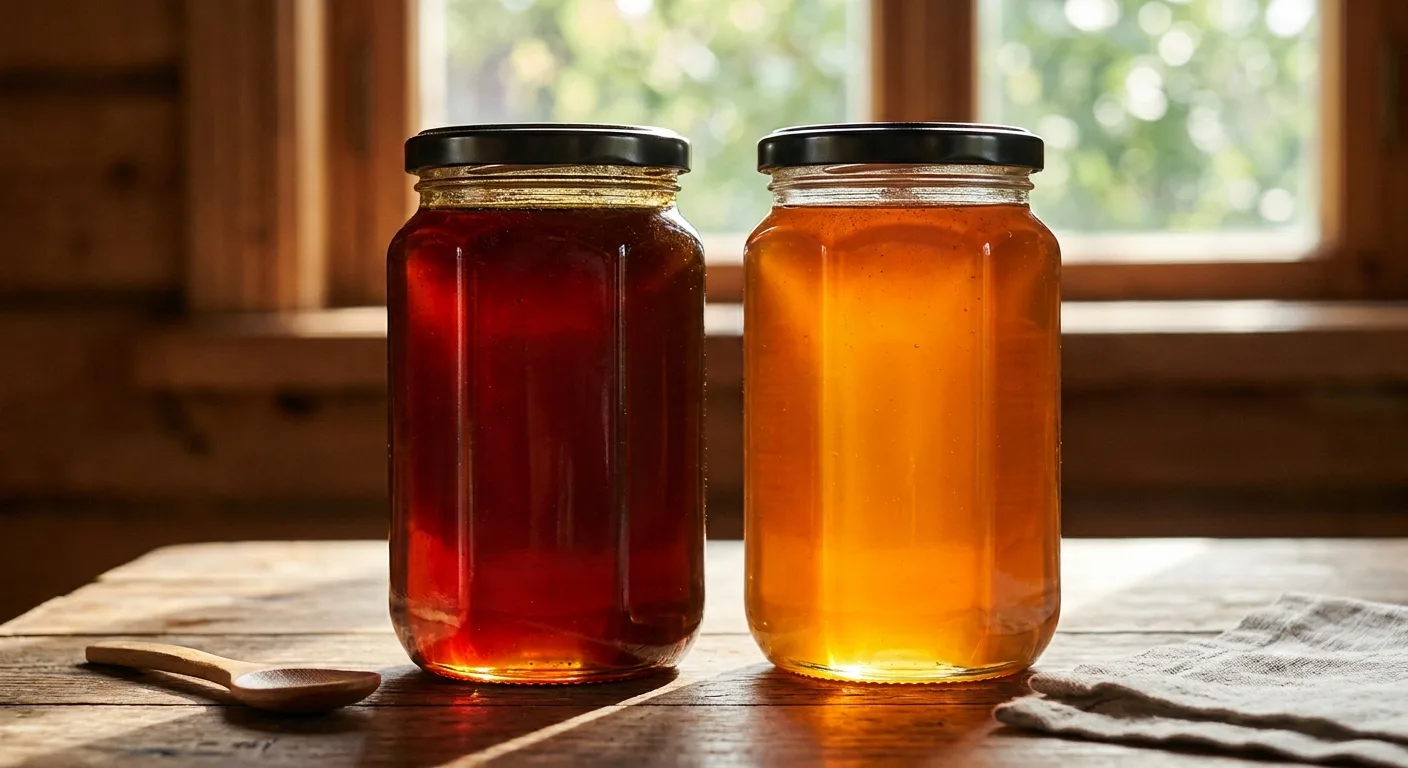
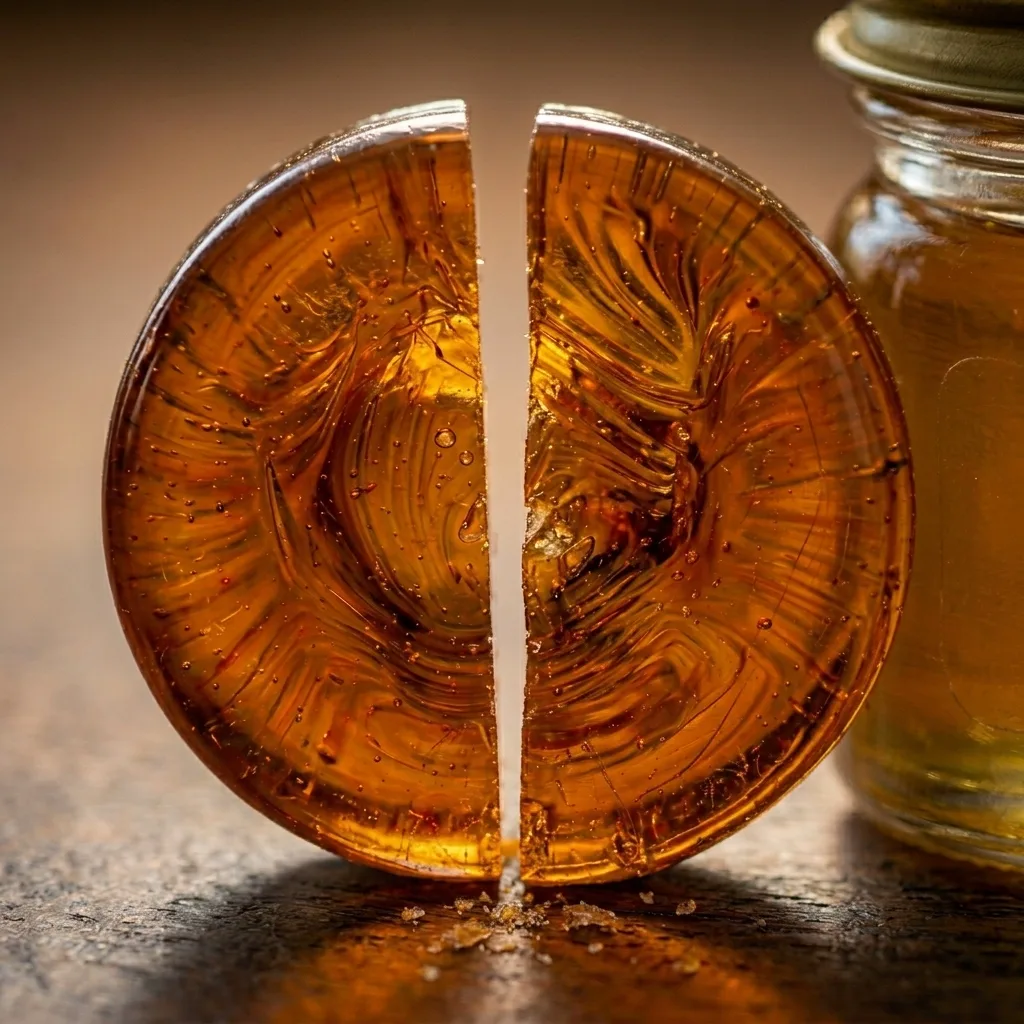
Short answer: A real men’s honey is a raw-honey product carrying adaptogen herbs (in our lozenges, Leuzea and Red Root at 5% each in a 90/5/5 recipe) that give it a strong, slightly bitter edge. It tastes strong because the herbs and the unheated honey both have real flavour. A cheap blend tastes flat and candy-sweet because it is mostly glucose syrup with flavouring, and almost no herb.
A man bites into a “honey for men” expecting sweetness, gets something sharp, herbal, or faintly bitter, and his first thought is “this is off” or “this is fake.” Arabic reviewers say it plainly: طعمه مر (its taste is bitter). The reaction makes sense, but it reads the signal backwards. For a real herbal honey the strong taste is usually the most honest thing about it. Below is what actually makes it taste that way, why a too-sweet version is the one to suspect, and what our own lozenges taste like.
What makes honey for men taste so strong or bitter?
The strong taste comes from two things a sweet supermarket honey doesn’t have: raw, unheated honey that keeps its own sharp floral character, and real adaptogen herbs that carry bitter plant compounds. In our lozenges that’s Leuzea (Rhaponticum carthamoides) and Red Root (Hedysarum neglectum), each about 5% of the lozenge, with raw Altai honey making up roughly 90%.
A raw honey supplement for men is a honey product carrying active plant compounds, so it tastes of the plants, not just of sugar. Leuzea and Red Root are roots and herbs, not sweeteners. The same bitterness you taste is the marker that the herb is present in a real amount rather than as a label decoration. Heat-processed, filtered honey loses much of its own taste and turns into plain sweetness, so a honey that still tastes of something, sharp, floral, a little bitter at the edge, is usually one that was kept raw (we hold our honey under 40°C as a raw ingredient before it goes into the lozenge).
More herb means less sweet, and more sweet almost always means less herb. The more a product leans on a glucose-syrup base, the sweeter and smoother it tastes, and the less Leuzea or Red Root it can be carrying. The men reviewing royal honey on Amazon.sa who complain طعمه مر, without meaning to, are describing a product that has more in it than sugar.
Is a bitter taste a sign the honey is fake or working?
Bitter does not mean fake. With a real herbal honey it usually means the opposite. The bitterness is the plant compounds in Leuzea and Red Root, and those are the same compounds tied to the steady-energy effect, which most men notice building around day 10 to 14, not the sweetness.
A man who tastes the bitterness and sends the pack back has the signal backwards. He assumes he was sold a bad batch, when an over-sweet, candy-smooth version is the one that more often hides a cheap sugar base. Real raw honey already varies in taste batch to batch (ours shifts a little with each harvest, gathered late June to mid-August near Lake Teletskoye in the Altai), and adding the 5% Leuzea and 5% Red Root pushes it further from dessert-sweet. The herbal edge is doing a job. None of this means every bitter honey is good, but bitterness alone is not the tell people think it is.
The more useful tell runs the other way. If a “strong men’s honey” tastes like flat syrup with nothing herbal behind the sweetness, that missing herbal edge is the warning sign, because it usually means there is no real Leuzea or Red Root in there to taste in the first place.
Strong real honey vs a cheap sweet blend: how the taste differs
Taste is the cheapest test you have before any lab. Here is how a real herbal honey like our lozenges, raw Altai honey carrying 5% Leuzea and 5% Red Root, reads against a syrup-based blend on the tongue:
- Sweetness. Raw Altai honey is sweet but not flatly so, with a sharp or floral edge from the honey itself before the herbs are even added. A cheap blend is uniformly candy-sweet, the sweetness of glucose syrup, with no edge to it.
- The aftertaste. The Leuzea and Red Root in our lozenges leave a slightly bitter, earthy aftertaste once the lozenge has dissolved. A syrup blend leaves nothing behind, just sweet, then gone.
- Batch to batch. Raw honey shifts in taste between harvests because it is a natural product; ours tastes a little different each year depending on what was flowering near Lake Teletskoye that late June to mid-August. A syrup blend tastes identical every single time, because it is manufactured to.
- Body and smell. Raw honey kept under 40°C, the way we hold ours before it goes into the lozenge, has a thick body and a real floral smell. A thin, almost smell-less product that pours like water is usually closer to flavoured syrup.
The pattern under all four: real ingredients like raw honey and 5% Leuzea are uneven and assertive, manufactured sweetness is smooth and identical. The strong, slightly bitter taste men complain about with طعمه مر is the fingerprint of the first kind.
Why does our honey taste herbal and not candy-sweet?
Because it is mostly raw honey carrying real herbs, not syrup carrying flavouring. Each lozenge is about 90% raw Altai honey, 5% Leuzea, 5% Red Root, with beeswax and a little concentrated cherry juice for taste. Five ingredients, and two of them are bitter roots, so a herbal, grown-up taste is the expected result, not a fault.
We balance it on purpose. The concentrated cherry juice is there to round the edge of the Leuzea and Red Root so the lozenge is pleasant to let dissolve over its three-to-four-minute melt, not to mask the herbs into dessert. We could make it sweeter by cutting the herb or adding syrup, but that would mean less of what a man over 30 is taking it for. The taste sits where it does because the recipe is 90/5/5, and we hold that line rather than tune it toward candy.
If you have had a “men’s honey” before that tasted like pure sugar and did nothing, that experience and this one are not the same product category, even if both are sold as honey. A flavoured syrup tastes of sugar because that is mostly what it is. Our lozenge tastes of raw Altai honey plus real Siberian herbs because that is what is in it at 90/5/5, and it is going to taste like it.
How strong honey for men actually fits into your day
A strong, herbal taste is easier to take when you know it is supposed to be there. The way to take our 90/5/5 lozenges, with their 5% Leuzea and 5% Red Root, works with the taste rather than against it:
- Let it dissolve, don’t chew it. Each lozenge takes three to four minutes to melt. Letting it dissolve slowly spreads the herbal taste out and is gentler than biting into a concentrated piece.
- Three a day, with or after food. The serving is three lozenges across the day. Taking them with or just after a meal sits easier and softens the sharpness for anyone sensitive to the bitterness.
- Judge it by day 10 to 14, not by the first taste. The taste tells you the herbs are there. The effect, steadier energy through the afternoon, builds over a 4-to-6-week course, not on day one.
A man who expects sweetness and gets herbs can read that as a defect on the first lozenge and stop. A man who knows the bitter edge is the Leuzea and Red Root doing their job tends to give the course the days it needs, through to the day 10 to 14 mark when the steadier energy shows up. Both men taste the same 5% Leuzea and 5% Red Root on the tongue. The difference is only in how each one reads that bitter Altai-honey edge, as a flaw or as proof the herbs are really in there.
FAQ
Why does honey for men taste bitter?
Because it contains real herbs, not just sweetener. In our lozenges the bitterness comes from Leuzea and Red Root, the two adaptogen herbs that make up about 5% each. Those are roots with natural bitter plant compounds, and they are the same compounds linked to the steady-energy effect. A men’s honey that tastes only candy-sweet usually has little real herb in it.
Is strong-tasting honey better than sweet honey?
Not automatically, but a strong, herbal taste is a better sign than flat candy-sweetness when you are buying a herbal honey. In our lozenges the 5% Leuzea and 5% Red Root are what add the bitter edge, and that edge is hard to fake, while a glucose-syrup blend tastes uniformly sweet because there is little real herb behind it. The over-sweet version is the one to be more suspicious of.
Does the bitter taste mean the honey has gone bad?
No. The bitterness is the Leuzea and Red Root plant compounds, not spoilage. Raw honey also varies in taste from batch to batch because it is a natural product; our Altai honey, gathered late June to mid-August, tastes a little different each harvest, so a new batch differing from the last one is normal, not a fault.
What does your honey for men taste like?
Sweet from the raw Altai honey, with a herbal, slightly bitter edge from the Leuzea and Red Root, and rounded by a little concentrated cherry juice. It is pleasant to let dissolve over its three-to-four-minute melt, not dessert-sweet. The recipe is 90% raw honey, 5% Leuzea and 5% Red Root, with beeswax and a little cherry juice to complete the five ingredients, so it tastes of real ingredients rather than syrup.
How can I tell a real men’s honey from a cheap sweet blend by taste?
A real one, like our 90/5/5 lozenge, is sweet with a sharp or bitter edge, leaves a faint herbal aftertaste from the Leuzea and Red Root, varies slightly between harvests, and has a thick body and real smell. A cheap blend is uniformly candy-sweet, leaves no aftertaste, tastes identical every time, and is often thin and almost odourless. Taste is your first check before any lab test.
Taste real herbs, not syrup
If you want a men’s honey where the strong taste is the herbs and not a marketing line, that is what our lozenges are: about 90% raw Altai honey, 5% Leuzea, 5% Red Root, lab-tested for safety and purity. One set is €144, roughly €3.00 a day, less than a Dubai espresso, and runs a full course of three a day over four to six weeks with a buffer. The herbal edge you taste on day one is the same thing working by day 10 to 14.
If what arrives is damaged or the wrong item, we replace it or refund it on a photo within 7 days. If you are still deciding whether you trust the honey itself, our guide on how to tell real honey from fake walks through the home checks, and what’s inside the lozenges lists all five ingredients in plain terms. A note on suitability: the lozenges are made for men over 30, not for anyone under 18, and if you are on blood-pressure, thyroid, or hormone medication, or have a beekeeping-product allergy, clear it with a doctor first.
See the lozenges and what’s inside →
Written by Yaroslav, founder of Nature’s Recipes. The bitter edge is not a flaw, it is the Leuzea and Red Root you are paying for. More on what goes into the lozenges.